

What's Inside This Guide
Most people arrive in Hurghada expecting a beach holiday and leave wondering why nobody told them about everything else. The diving. The desert at sunset. The day trip to ancient Luxor that completely rewires your sense of time. The private boat with nobody else on it.
This guide covers the full picture — sea activities, desert adventures, cultural day trips, evening options, and practical tips — so you can actually use your time here rather than spend it scrolling through TripAdvisor at the pool bar.
Why Hurghada in 2026?
Hurghada stretches over 40 kilometers of Red Sea coastline and hosts more than a dozen distinct reef systems, with several areas protected as national park. The Red Sea contains over 1,200 species of fish and around 200 species of coral — including a significant percentage found nowhere else on Earth. Water visibility regularly exceeds 30 meters. On most days, underwater conditions here are better than in Thailand, the Maldives, or the Caribbean, at a fraction of the cost.
Beyond the water, the Eastern Desert starts about 20 minutes from any hotel. Ancient Luxor — temples, tombs, the Valley of the Kings — is a 3.5-hour drive away.
Weather-wise, Hurghada averages over 320 sunny days a year, with virtually no rainfall. The prime season runs October to April, with temperatures between 20–30°C and sea temperatures between 22–26°C. Summer (June–August) pushes above 35°C during the day but the sea hits 28–31°C .
read
Is Hurghada Safe to Visit in 2026? Latest Travel Advice & Local Insights
1. Snorkeling in Hurghada — Reef Life That Actually Delivers
Every article on Hurghada mentions snorkeling. Not all of them tell you how to do it well.
The best reefs are around the Giftun Islands, about 30 minutes by boat. Sites like Abu Ramada — known locally as The Aquarium — and Umm Gamar are consistently reliable, with shallow gardens of hard and soft coral, parrotfish, moray eels, and the occasional sea turtle.
The key decision is which boat experience you want. Group trips are cheaper and perfectly fine, but they land multiple boats at the same reef simultaneously. If you care about having space in the water — and most people do, once they’ve seen the difference — a private snorkeling tour in Hurghada changes everything. You choose the sites, you choose the pace, and the guide pays attention to you rather than managing twenty people in different directions.
2. The Islands of Hurghada — What’s Actually Out There
Ask ten tourists in Hurghada about “the islands” and you’ll get ten different answers — Orange Bay, Mahmya, Paradise, Giftun, the aquarium reef. Everyone’s been somewhere, but very few people have a clear picture of what actually exists offshore. Here’s the real geography.
Giftun Island — The Big One
Giftun Island is the largest island near Hurghada and the one everything else revolves around. It sits inside the Giftun National Park, a protected marine area about 7–10 kilometers offshore. The island is substantial enough that it has several distinct beaches, and this is where most people get confused — because each beach is marketed separately, often as if it were its own island.
The main beaches on Giftun Island, from most famous to least known, are:
- Orange Bay — on the southwestern side of Giftun, a long shallow sandbar with white sand, sea swings, floating platforms, and facilities. The most photographed beach in Hurghada. Calm enough for young children, busy enough by mid-morning that early arrival makes a real difference.
- Mahmya — at the southern tip of the island, managed as an eco-tourism zone with controlled visitor numbers. Quieter than Orange Bay by design, with better direct reef access from the beach. Slightly higher price, and access is managed through a single operator. Worth it if you priorities calm over convenience.
- Paradise Island — also on the southern side of Giftun, close to Mahmya. More of an entertainment beach — stage shows, music, water sports, busier atmosphere. Good for active travelers and groups; not the right choice if you want a quiet day.
- Hula Hula, Nemo, Eden, Ozaria — smaller beach setups along the island, less developed. Each has different facilities and capacity. Less crowded than the main three but also fewer amenities.
One thing worth making clear: none of these are separate islands. They are all beaches on Giftun Island. The names are used by tour operators to describe which section of the same island you’re visiting.
Small Giftun (Giftun El Saghir)
The smaller sister island north of Giftun. Mostly undeveloped — no beach clubs, no umbrellas, no facilities. What it has is unspoiled reef and isolation. Some diving liveaboards and private boat trips stop here precisely because there’s no one else around.
Abu Ramada — The Aquarium
Abu Ramada Island is a different kind of destination. It’s not a beach day — it’s a reef day. Located south of Giftun, about 60–90 minutes from Hurghada by boat, the reef surrounding Abu Ramada is nicknamed “The Aquarium” and earns the name. The main dive site features a large oval coral formation sitting on a sandy plateau at 10–16 meters, with coral pinnacles rising almost to the surface.
The fish density here is exceptional — walls of blue-striped snappers, parrotfish, moray eels, and hawksbill turtles. For snorkelers, the shallow depth means sunlight reaches the entire reef, making visibility and colour unusually good. For divers, there are three distinct sites offering different experiences: the main aquarium reef, a northern plateau with coral towers, and a deeper wall with gorgonians and soft corals on the eastern side. Almost every serious snorkeling or diving day trip from Hurghada includes an Abu Ramada stop.
Magawish Island
Magawish sits about 7.5 kilometers southeast of Hurghada and covers roughly 850,000 square meters — making it one of the larger islands in the area. It’s developed as a tourist destination with a beach, restaurant, water sports, and direct diving access from shore. The surrounding reef is healthy and diverse, with over 40 recorded species of hard and soft coral. Magawish works well as a slightly less crowded alternative to the Giftun beaches, and it’s close enough to Hurghada that the boat journey is shorter — around 20–30 minutes.
Abu Monkar — Mangroves and Marine Reserve
Abu Monkar is the quietest and least-visited of Hurghada’s main islands — and that’s exactly what makes it interesting. The island is known for its mangrove forests, which are rare in the northern Red Sea and support a distinct ecosystem. It’s not a beach destination in the conventional sense; it’s a nature destination. Birdwatchers, underwater photographers, and travelers who want to see a side of the Red Sea coast that has nothing to do with sunbeds or buffet lunches tend to gravitate here.
Bianca Island — The Southern Option
Further south along the coastline, Bianca Island is a quieter, less-developed alternative that has been attracting attention as the Giftun beaches get busier. The reef access is good and the atmosphere is noticeably calmer. It’s beginning to appear in private boat itineraries for guests who want the island experience without the crowds.
The practical question most guests ask is: which one should I go to? The honest answer is that it depends on what you’re optimizing for. Orange Bay wins on atmosphere and facilities. Mahmya wins on peace and reef quality from the beach. Abu Ramada wins if the underwater experience is the priority. Magawish works well for families who want a shorter boat journey. And if you book a private boat, you can combine two or three stops in a single day on your own schedule.
Private Speed Boat to Orange Bay Hurghada
3. Scuba Diving — From Beginners to World-Class Wrecks
The Red Sea is one of the ten best diving destinations in the world. That’s not marketing — it’s the consensus of serious dive publications and it’s based on: visibility (often 30+ meters), marine biodiversity, year-round water temperatures (never below 20°C), and access to historic wreck sites that have no equal outside the Second World War theatres.
For beginners, Hurghada is an exceptional place to learn. PADI try-dives and courses run daily from dozens of centers, with calm, shallow sites that aren’t overwhelming. The marine life engages quickly — you don’t have to swim far to find something worth seeing.
For experienced divers, the real draws are the wrecks. The SS Thistlegorm, a British WWII supply ship that sank in 1941 near Shaab Ali, is among the most famous wreck dives on the planet. Trucks, motorcycles, rail wagons and aircraft parts sit frozen in time at 16–30 meters, covered in coral that’s been growing for over 80 years.
Closer to Hurghada, Abu Nuhas hosts four wrecks in one location — including the Giannis D and the Carnatic — accessible as a day trip. The Rosalie Moller and the Salem Express (near Safaga) are also within range, each with different character and emotional weight.
4. Dolphin House – Wild Dolphins, Not a Show
Shaab El Erg — better known as Dolphin House — is a reef system about 25 kilometers north of Hurghada that a pod of wild spinner dolphins has adopted as their home. They feed here and rest here, and on good days they’re visible both underwater and on the surface.
The key word is wild. This isn’t a show, there’s no feeding, and the dolphins choose whether to interact or not. On most days they do — spinner dolphins are curious and will swim alongside snorkelers if you move calmly. On some days they stay deep or move away, and a good guide will respect that without pressuring an interaction.
European and American visitors increasingly search specifically for ethical dolphin encounters — meaning no captivity, no feeding, no harassment. Dolphin House checks all three boxes, which is part of why it’s grown so quickly in the itineraries of wildlife-conscious travelers.
5. Desert Safari — The Other Side of Hurghada
Twenty minutes from the nearest hotel, the Red Sea Mountains rise from flat desert into raw landscape that most tourists never see. This is a genuine oversight.
A classic Hurghada desert safari takes you into the Eastern Desert — usually by quad bike, jeep, or ATV — through sand dunes and rocky terrain to a Bedouin-style camp where you can watch the sunset and eat around a fire. Basic versions run a few hours. More elaborate super safaris combine multiple vehicles (quad plus buggy), a camel ride, Bedouin hospitality, belly dancing, and sometimes dinner under open sky.
The stargazing tour is something in its own category. Hurghada has almost no rainfall and very low humidity. The desert has almost no light pollution. On clear nights — which is most nights — the Milky Way is visible with the naked eye in a way that shocks most people who’ve spent their lives in European cities. If you’re booking time in Hurghada between October and April, a private stargazing night in the desert is the one experience that consistently produces the strongest reaction from guests.
6. Day Trips to Luxor — Ancient Egypt, 3.5 Hours Away
Hurghada sits at an unusual geographical point. The Red Sea coast. The Eastern Desert. And on the other side of that desert, the Nile Valley — with Luxor about 270 kilometers southwest.
Luxor contains the Valley of the Kings, Karnak Temple, the Temple of Hatshepsut, and the Temple of Luxor. These are not minor attractions. The Valley of the Kings alone holds 63 royal tombs carved directly into the limestone cliffs, painted with texts and imagery that are 3,000 years old and still vivid. Karnak is the largest religious complex ever built.
The Hurghada to Luxor day trip is available by car (3–3.5 hours each way through dramatic desert scenery).
One increasingly popular option is combining the day trip with a hot air balloon over Luxor at sunrise — a genuinely otherworldly experience over the West Bank temples before the heat of the day sets in.
7. Day Trips to Cairo and the Pyramids
The Hurghada to Cairo day trip is more ambitious than Luxor — 470 kilometers by road (about 6 hours each way) or roughly an hour by domestic flight. Most people who do it fly both ways, which brings the total travel time down to manageable and leaves a full day at the sites.
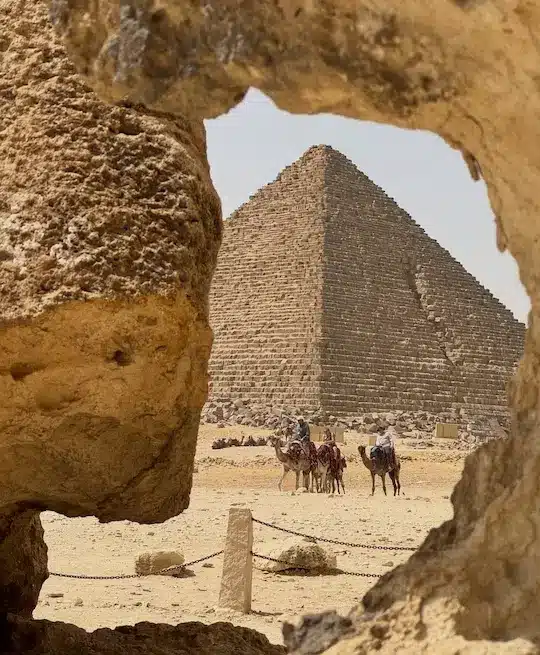
The Giza Pyramids are exactly what you expect, and somehow still surprising. The scale of the Great Pyramid in particular doesn’t make sense until you’re standing next to it. The Sphinx, the Valley Temple — the complex takes most of a morning on its own.
The Grand Egyptian Museum, is one of the world’s largest archaeological museums. The ground floor’s Grand Staircase alone — displaying thousands of artefacts — is a 20-minute walk. Tutankhamun’s complete collection is here, including the famous golden mask and over 5,000 objects from his tomb, many exhibited publicly for the first time.
A full day in Cairo realistically covers Giza plus two or three hours at the GEM. That’s enough for a strong experience — but it does mean moving at pace.
8. Private Boat and Yacht Trips
One of the fastest-growing segments of Hurghada tourism is private boat hire — not a group tour on a large boat, but a private vessel, your group only, with full flexibility over where you go and when.
A private boat trip in Hurghada can mean a speedboat for a small family, a motorized day yacht for a group of friends, or something more substantial for a longer experience. The practical difference from group tours: you stop at the reefs you choose, you stay as long as you want, and the day doesn’t run on anyone else’s schedule.
9. Hurghada at Night — Marina, Shows, and Evenings Worth Having
The stretch of Hurghada that most resort guests never reach is the Marina — the waterfront area about 20 minutes south of the main hotel strip, where restaurants, cafés, and bars line up along a promenade with actual good food and atmosphere. The yacht berths are visible from the terrace tables. On warm evenings (which is most evenings), it’s a genuinely pleasant place to spend a few hours.
The Old Town, El Dahar, is the other option for anyone who wants to see Hurghada beyond the resorts. This is the original city — before the international hotels, before the marinas — where Hurghada was a fishing settlement named for a desert plant (the Arabic word ghardaq). It still feels like a working Egyptian town: local markets, fresh fish at the market, mosques and a Coptic cathedral within a few minutes of each other, prices a quarter of what you pay near the beach.
10. Hurghada for Families
Hurghada works well for families, largely because water temperature and conditions make snorkeling accessible for children from quite a young age, and because there are enough alternative attractions that a 10-day trip doesn’t feel repetitive.
Makadi Water World — one of Egypt’s larger waterparks — is in Makadi Bay, about 20 minutes south of central Hurghada. For a day off from the sea, it does what waterparks do.
The Hurghada Grand Aquarium (submarine-shaped building near the Marina) gives younger children an indoor encounter with Red Sea marine life, which pairs well with snorkeling as a way to understand what they’re seeing underwater.
Glass-bottom boat trips let non-swimmers see the reef without getting in the water — genuinely useful for mixed-ability family groups.
11. What About El Gouna?
El Gouna is 30 kilometers north of Hurghada and operates almost as a separate world. It’s a planned resort town built on a series of lagoons, with a genuine town center, restaurants, boutique hotels, a golf course, and a kitesurfing scene that attracts serious wind athletes.
As a day trip from Hurghada, it’s worth an afternoon if you want a different atmosphere. As a base for a longer stay, it appeals to people who want more of a town feel rather than a pure beach resort.
12. Practical Basics for 2026
Getting Around
Taxis in Hurghada have fixed fares for most common journeys, though prices should be confirmed before getting in. Uber and InDriver operate in the city and are generally cheaper and more predictable than flagging down a taxi. Private transfers from your hotel are the easiest option for day trips and excursions.
Visa
Most European nationalities and Americans receive a visa on arrival at Hurghada International Airport (HRG), currently priced at $30 USD. The e-visa option is also available to apply in advance.
Currency
Egyptian pound (EGP). Card payments are accepted at most hotels and larger restaurants, but smaller markets, taxis, and individual vendors are cash only. ATMs are available at the airport and throughout the resort areas.
Language
English is widely spoken in tourist areas, hotels, and by most guides and tour operators. Basic Arabic phrases are appreciated but not necessary.
Safety
Hurghada has a strong tourism security presence and a long track record as a safe destination for European and American visitors.
Quick Reference: Matching Activities to Your Trip
| You want to… | Go for… |
| See the best coral and fish | Private snorkeling trip — Giftun Islands or Abu Ramada |
| No shopping stops, ever | Any private tour from Luxe Tours Egypt |
| Experience ancient Egypt | Luxor day trip |
| See the Pyramids | Cairo day trip — add Grand Egyptian Museum |
| Get off the beach for one day | Desert safari — sunset version |
| Something the kids will remember | Dolphin House, or glass-bottom boat + snorkeling |
| An evening worth the trip | Marina dinner + city tour |
| Quiet island experience | Mahmya — eco-managed, genuinely less crowded |
| Instagram island | Orange Bay — go early or go private |
| Learn to dive | PADI beginner course at any reputable Hurghada center |
FAQ — Things to Do in Hurghada 2026
How many days do you need in Hurghada?
Most people get the full picture in 5–7 days: a couple of sea days, one desert safari, one day trip (Luxor or Cairo), and time to relax. Ten days is comfortable if you want to fit in both Luxor and Cairo without rushing.
What is Hurghada best known for?
The Red Sea diving and snorkeling — it’s genuinely world-class. After that: the islands (Orange Bay, Giftun, Mahmya), desert safaris, and the access to Luxor and Cairo that most coastal resorts don’t have.
Can you swim in Hurghada year-round?
Yes. Sea temperature ranges from around 21°C in winter to 29–31°C in late summer. Most Europeans find it comfortable for swimming from October through May; in summer the water is warm enough that children will stay in it for hours.
Is Hurghada good for couples?
Very much so. A private boat to a quiet island, a sunset desert experience, a hot air balloon over Luxor at sunrise — there are strong options at the romantic end of the spectrum.
Are there things to do in Hurghada besides the beach?
Yes, significantly. Desert safaris, Luxor day trips, Cairo excursions, the Old Town of El Dahar, El Gouna, the Marina — the beach is actually a small part of what a good Hurghada trip involves.
What makes Luxe Tours Egypt different from other operators?
Private tours, no shopping stops, guides who know the sites well. Our guests don’t get taken to papyrus galleries or perfume shops — those stops exist to benefit operators, not travelers. Every excursion we run goes to the actual destination and back.
How do I book a private tour in Hurghada?
Contact us directly on WhatsApp — we’ll confirm availability, discuss exactly what you want from the experience, and handle everything from hotel pickup to return transfer


[…] Things to Do in Hurghada 2026 — The Complete Local Guide […]
[…] Things to Do in Hurghada 2026 […]
[…] Things To Do In Hurghada […]
[…] Nights drop to 11°C — cold by Egyptian standards and noticeably colder on the water. Ideal for sightseeing and day trips. Not the month for a hot beach […]