
What's Inside This Guide
Private Luxor Day Trip from Hurghada
You’re sitting by the Red Sea in Hurghada, cocktail in hand, watching turquoise waves lap at the shore — and somewhere in the back of your mind, you know that just a few hours away, one of the greatest collections of ancient monuments on earth is waiting. Temples built three thousand years ago. Royal tombs carved deep into golden limestone cliffs. The city that was once the capital of the most powerful empire in the ancient world.
That’s Luxor. And the good news? You don’t need to fly there, change hotels, or spend several days away from the beach. A private Luxor day trip from Hurghada lets you experience the very best of Upper Egypt and still be back at your hotel for a late dinner by the pool.
This guide covers everything: what the journey looks like, exactly what you’ll see, what makes this trip genuinely worth doing, and how to make sure you don’t waste a single minute of your day in one of the most extraordinary places on earth.
| Hurghada to Luxor Day Trip — At a Glance | |
| Departure | 4:00 AM from your hotel |
| Return | Approx. 7:00–8:30 PM to your hotel |
| Total Duration | ~15 hours (including travel) |
| Distance | ~230 km each way (approx. 3 hrs driving) |
| Transport | Private air-conditioned vehicle |
| Included Sites | Valley of the Kings · Hatshepsut Temple · Colossi of Memnon · Karnak Temple · Lunch |
| Optional Add-ons | Nile felucca crossing · Tomb of Tutankhamun · Hot Air Balloon (overnight required) |
| Shopping Stops | None — 100% focused on history |
| Group Type | 100% private — just your group |
The Journey: Hurghada to Luxor by Private Car
Your driver arrives at your hotel at 4:00 AM. It’s an early start, but there’s a good reason for it: the West Bank sites open at dawn, and arriving early means you’ll experience the Valley of the Kings before the tour buses from Luxor hotels have even started loading. In summer especially, the morning hours are cooler and the tombs are at their most peaceful.
The drive from Hurghada to Luxor takes approximately three hours through some of Egypt’s most dramatic desert scenery — the road cuts through the Eastern Desert, with stark mountain ranges on either side and almost nothing between the Red Sea coast and the Nile Valley. It’s genuinely striking in the early morning light.
You’ll cross from the arid Red Sea Governorate into Luxor Governorate, and the moment you descend towards the Nile, the landscape transforms completely: date palms, green fields, the wide brown river, and in the distance, the limestone cliffs of the West Bank where the pharaohs chose to be buried.
“Arriving at the Valley of the Kings in the early morning, before the crowds — that’s when the place reveals its full weight. The silence and the scale of it are something you carry home with you.”
The West Bank: Tombs, Temples & Ancient Wonders
The West Bank of Luxor is where the ancient Egyptians buried their dead — and where their greatest pharaohs chose to rest for eternity. The morning is devoted entirely to this extraordinary area.
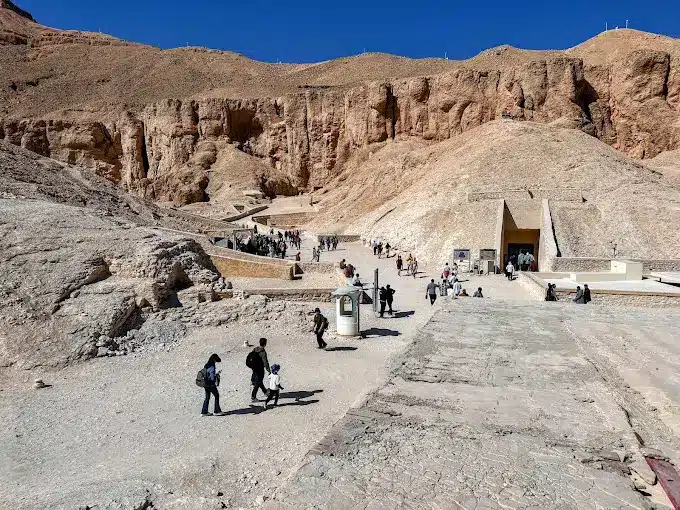
Valley of the Kings
This is the centerpiece of any West Bank visit, and for good reason. Hidden in a dry valley behind the West Bank cliffs, the Valley of the Kings served as the royal burial ground for the pharaohs of the New Kingdom — around 500 years of Egyptian history, from approximately 1550 to 1070 BC. 65 tombs have been discovered here, including those of Ramesses the Great, Seti I, and the boy-king Tutankhamun.
Your entry ticket includes access to three tombs of your choice. Each one is a journey into another world: long corridors descending into the rock, walls entirely covered in hieroglyphic texts and painted scenes from the Books of the Dead — guides for the pharaoh’s journey into the afterlife. The colors, considering their age, are breathtaking.
- Tomb of Ramesses IV — one of the most accessible and most vividly decorated
- Tomb of Ramesses IX — a long corridor with exceptional astronomical ceiling
- Tomb of Merenptah — deep, dramatic, and less crowded than the most famous tombs
The Tomb of Tutankhamun requires a separate ticket (optional). Despite being the smallest royal tomb in the Valley — because Tutankhamun died young and unexpectedly — it’s the only one where the royal mummy remains in situ, and seeing the boy-king in his golden shrine is genuinely moving. We’re happy to add this if it’s on your list.
Hatshepsut Temple (Deir el-Bahari)
Cut directly into the golden cliffs of the West Bank, the Mortuary Temple of Hatshepsut is one of the most architecturally striking buildings in all of Egypt. Hatshepsut was one of ancient Egypt’s few female pharaohs — a ruler of exceptional ability who presided over a period of prosperity and built on a scale that matched any of her male counterparts.
The temple rises in three colonnaded terraces against the cliff face, decorated with painted reliefs that have retained extraordinary color after three millennia. Take time here — the detail in the carvings, and the sheer audacity of the building’s design, rewards slow looking.
Colossi of Memnon
two enormous seated statues of Pharaoh Amenhotep III, each standing 18 meters tall, that have guarded the entrance to the West Bank for over 3,400 years. They’re the first thing you see as you cross into this ancient landscape, and they set the tone immediately: this is a place on a completely different scale from ordinary history.
Optional: Crossing the Nile by Felucca
To move between the West Bank and East Bank, most groups transfer by road bridge. But if you’d like a more memorable crossing, we can arrange a short felucca ride — one of Egypt’s traditional wooden sailing boats — across the Nile. This takes around 15–20 minutes and gives you an unhurried view of the river, the green fields on either bank, and the West Bank cliffs receding behind you as Karnak’s pylons come into view ahead.
It’s a small addition to the day but one that many guests say they treasure — the Nile from the water feels completely different from looking at it from a bridge, and it’s the way Egyptians have been making this crossing for thousands of years.
Lunch in Luxor
Midday in Luxor means it’s time to eat. Your guide will take you to a good local restaurant — proper Egyptian food, nothing tourist-trap about it. Fresh mezze, grilled meats, koshary if you want it, cold drinks. A proper sit-down meal in the shade before the afternoon push.
This is also a good moment to ask your guide anything about what you’ve seen so far — the context and stories behind the sites, the history of the pharaohs, the practical details of how the tombs were built and discovered. Our guides are licensed Egyptologists who genuinely love this material, and lunch conversations tend to go interesting places.
The East Bank: Karnak Temple
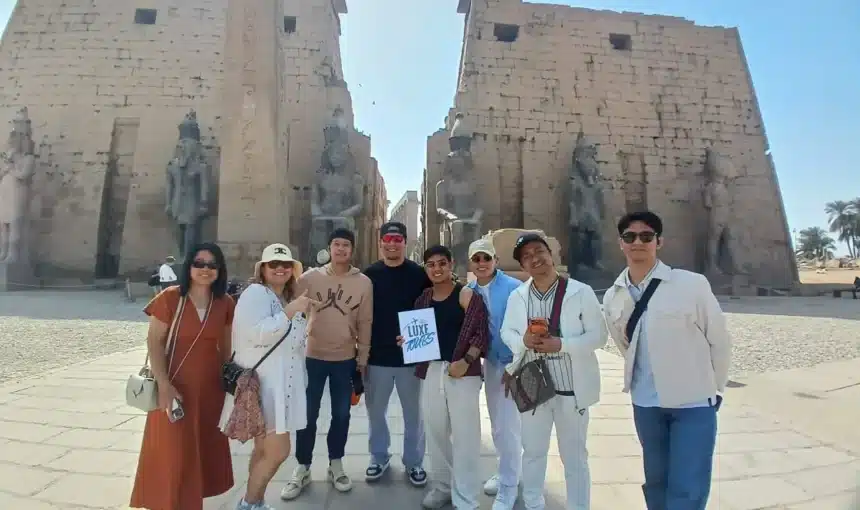
After lunch, you cross to the East Bank for the afternoon’s main event: the Karnak Temple Complex.
Karnak is not a temple. It’s a city of temples — the largest ancient religious site ever built. Construction began around 2000 BC and continued for over 1,500 years, with successive pharaohs each adding their own halls, pylons, obelisks, and sanctuaries. The result is a layered, overwhelming accumulation of ancient ambition that covers over 100 hectares.
The Great Hypostyle Hall alone is enough to stop you in your tracks: a forest of 134 massive columns, each one carved with hieroglyphs and painted reliefs, arranged in 16 rows and covering an area the size of a football pitch. The scale is so extreme that it takes a moment to recalibrate your sense of what human beings are capable of building with hand tools and willpower.
- The Avenue of Sphinxes — the ceremonial processional road connecting Karnak to Luxor Temple, 3 km long
- The Sacred Lake — where the priests of Amun performed their daily purification rituals
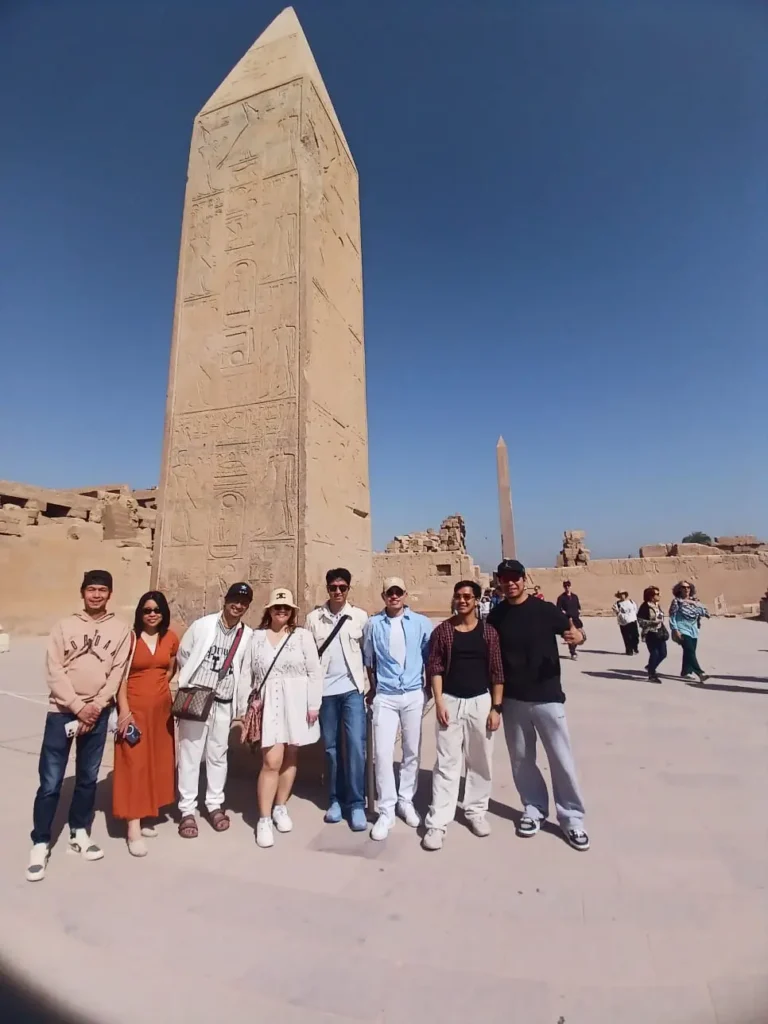
- The Obelisks of Hatshepsut — two of the tallest obelisks in Egypt, one still standing at 29 metres
- The Festival Hall of Thutmose III — with its extraordinary ‘botanical garden’ reliefs showing plants and animals brought back from military campaigns
“Karnak is the place where ancient Egyptian religion reached its most monumental expression. Walking through it, you understand why the ancient world considered Egypt so extraordinary.”
No Shopping Stops. Ever.
We want to be completely transparent about this, because it matters and because it distinguishes us from many other operators in Egypt.
We do not take our guests to papyrus shops, alabaster factories, perfume houses, or any other commercial stop. Not one. Your time in Luxor is limited and precious — every minute spent inside a commission shop is a minute not spent at Karnak or in the Valley of the Kings. We will never compromise your experience for a financial arrangement with a third-party vendor.
If you’d like to bring home a souvenir from Luxor, we’ll point you towards the best local market stalls near the sites — places where you can browse independently, at your own pace, and negotiate directly with sellers without pressure or inflated ‘tourist prices’. You’re in control of your own money and your own time.
This is the way we believe private touring should work, and our guests consistently tell us it’s one of the things they appreciate most.
The Return to Hurghada
Departure from Luxor is at 4:00 PM. Your private vehicle takes you back through the Eastern Desert, arriving at your Hurghada hotel between 7:00 and 8:30 PM depending on traffic.
It’s a long day — there’s no pretending otherwise. You’ll be on your feet for most of it, in the sun, taking in an extraordinary amount of history. But the guests who do this trip consistently say the same thing: they’d do it again without hesitation. There is genuinely nothing like it.
Want More? Two Upgrade Options
Option 1: Add the Hot Air Balloon (Overnight Required)
Luxor’s hot air balloon flights take off at sunrise — which means they’re incompatible with a same-day return to Hurghada. But if you’re open to spending one night in Luxor, we can build you a two-day itinerary: balloon flight at dawn over the West Bank, then a full day at the sites without the time pressure of a same-day return. This is one of the most spectacular things you can do in Egypt.
Private Luxor Hot Air Balloon Day Trip from Hurghada
Option 2: Two Full Days — East Bank & West Bank Separately
The one-day trip covers the absolute highlights. But Luxor has more: Luxor Temple (especially beautiful at night), the Tomb of Nefertari (extra ticket, extraordinary paintings), Medinet Habu (the mortuary temple of Ramesses III, strikingly well-preserved), and Deir el-Medina (the village where the tomb-builders lived). For history enthusiasts, a two-day version — one day West Bank, one day East Bank — gives you the space to go deeper without rushing.
| Ready to book your Luxor day trip from Hurghada? Contact us on WhatsApp and we’ll arrange everything — pickup, guide, tickets, and lunch. Private, personalised, no shopping stops. |
Practical Information
| Everything You Need to Know Before You Go | |
| Departure Time | 4:00 AM from your hotel lobby |
| Return Time | Approx. 7:00–8:30 PM |
| What’s Included | Private A/C vehicle · Licensed Egyptologist guide · Entry tickets (3 tombs in Valley of the Kings, Hatshepsut, Colossi, Karnak) · Lunch |
| Optional Extras | Tomb of Tutankhamun · Felucca Nile crossing · Hot air balloon (overnight) |
| What to Wear | Comfortable walking shoes · Light breathable clothing · Hat and sunglasses |
| What to Bring | Sunscreen · Refillable water bottle · Camera |
| Minimum Age | No restriction — suitable for all ages with good mobility |
| Fitness Level | Moderate — significant walking on uneven ground; not suitable for those with mobility limitations |
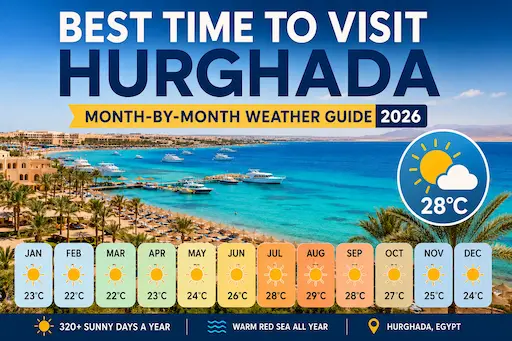
| Best Season | Oct–Apr for cooler temperatures; May–Sep is possible but very hot — early start helps |
| Group Size | 100% private — just your group, your guide |
Frequently Asked Questions
How long is the drive from Hurghada to Luxor?
Approximately 3 hours each way — around 230 km through the Eastern Desert. The road is modern and well-maintained. Your driver will be experienced on this route.
Is a Luxor day trip from Hurghada worth it?
Unequivocally yes, if you have any interest in ancient history. Luxor contains the highest concentration of ancient monuments anywhere on earth. The Valley of the Kings and Karnak Temple together represent the peak of ancient Egyptian civilisation. The long day is worth it.
How many tombs can I visit in the Valley of the Kings?
Your standard entry ticket covers three tombs. The Tomb of Tutankhamun requires a separate ticket (optional). Your guide will recommend the best combination based on current access and your interests.
Do I need to book in advance?
Yes. This tour runs on fixed departures and requires advance booking to confirm your vehicle, guide, and temple entry tickets. Contact us on WhatsApp to check availability and reserve.
Is the day trip suitable for children?
Yes — children generally find the Valley of the Kings and the scale of Karnak genuinely exciting. The main consideration is the heat (especially in summer) and the amount of walking. Bring hats, sunscreen, and water for younger travelers.
What should I wear?
Light, breathable clothing for the heat. Comfortable walking shoes are essential — the sites involve significant distances on uneven ground.
Will there be shopping stops?
No. Never. Our tours do not include commercial stops of any kind. Your time is dedicated entirely to the historical sites.
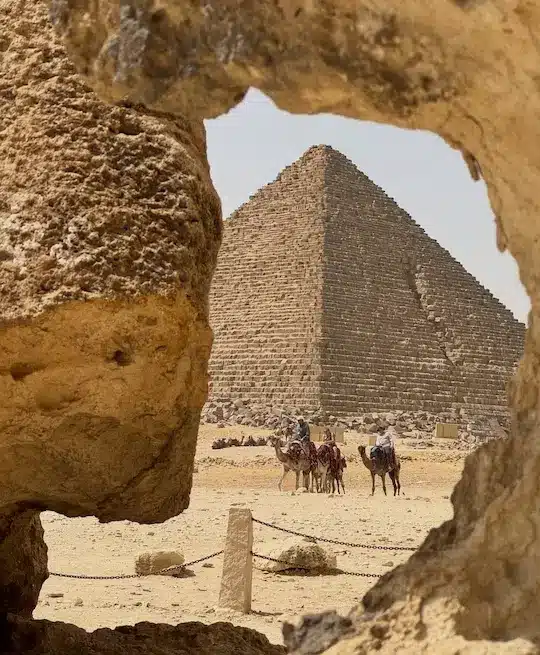

[…] Hurghada to Luxor Day Trip: The Complete 2026 Guide […]
[…] Hurghada to Luxor Day Trip — Valley of the Kings, Karnak Temple, and the Nile in one day […]
[…] for: Winter sun, Luxor and Cairo day trips, diving for […]