
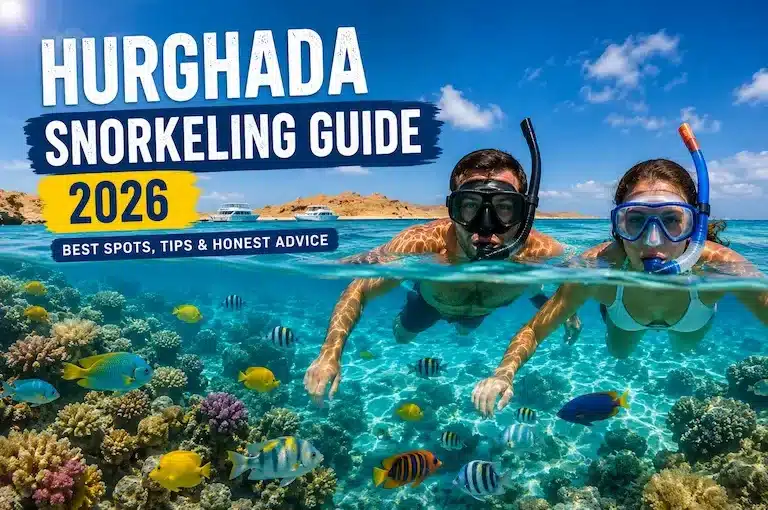
If you’re searching for the best snorkeling in Hurghada, this guide explains exactly where to go, what you’ll see, and which snorkeling tours in Hurghada are actually worth your money — without the filler most travel sites pad their articles with.
The Red Sea is home to more than 1,200 fish species and hundreds of coral species and water visibility that regularly exceeds 30 meters. The conditions here are genuinely world-class. The practical decisions — which site, which tour, early or mid-morning — determine how much of that you get to experience.
What's Inside This Guide
Is Snorkeling in Hurghada Worth It?
Yes — and not because every travel guide says so. The reef systems around the Giftun Islands are a protected national park where anchoring is restricted, collecting is illegal, and visitor numbers at eco-managed zones are controlled. That protection is why the reef here is in better shape than most accessible snorkeling destinations in the Mediterranean or Caribbean.
The one honest caveat: the best sites require a boat. Shore snorkeling exists at El Fanous and a few hotel house reefs, but the reef systems that make Hurghada exceptional are 45–90 minutes offshore. Choosing the right snorkeling tour in Hurghada is part of choosing the right experience.
Understanding the Islands: What Most Guides Get Wrong
Orange Bay, Mahmya, Paradise, Hula Hula, Nemo, Eden, and Ozaria are all described as islands in most Hurghada tour listings. They are not. This is one of the biggest misconceptions visitors have when booking snorkeling trips from Hurghada.
Every one of them is a beach on Giftun Island — the large national park island 7–10 km offshore. When you book a ‘Mahmya Island snorkeling tour’, you’re booking a trip to a beach on Giftun Island.
The actual separate islands for snorkeling around Hurghada:
- Giftun Island — the main island with all the named beaches on its southern and western sides
- Small Giftun — undeveloped, no facilities, good private boat stop for quieter reef
- Abu Ramada — reef island southeast, nicknamed “The Aquarium”
- Magawish — 20–30 min from Hurghada, reef from beach, family-friendly
- Abu Monkar — mangrove forests, nature destination, not a snorkeling beach
- Bianca — quieter, south of Hurghada, increasingly on private itineraries
The Best Snorkeling Spots in Hurghada
Giftun Island — Orange Bay and Mahmya Beaches
Abu Ramada is widely considered the best snorkeling spot in Hurghada for reef quality and marine life density.
The southern side of Giftun Island is the most visited snorkeling destination from Hurghada. The reef starts shallow (0.5–2 meters), conditions are calm, and the marine life is immediately engaging: parrotfish, moray eels, pufferfish, hawksbill turtles, and schools of blue-striped snappers. This is the right starting point for beginner and family snorkeling.
Orange Bay (southwestern tip) has the iconic beach setup — white sand, turquoise water, sea swings, floating platforms. The snorkeling en route and offshore is solid, though the beach fills up with group boats by mid-morning. Mahmya (southern tip) has controlled visitor numbers and better reef access from the beach — worth the slightly higher price if the underwater experience matters more than the facilities.
Best for: Beginners, families, first Red Sea snorkelers | Depth: 0.5–8m | Boat time: 45–60 min
Want a quieter Giftun experience without the crowds? Browse our private Giftun Island snorkeling trips → sea activities page
Abu Ramada — “The Aquarium”
Abu Ramada is what serious snorkelers come to Hurghada for. The main site is a large oval coral formation at 10–16 meters with pinnacles rising almost to the surface. Fish density here is exceptional — walls of blue-striped snappers, parrotfish in several species, hawksbill turtles feeding completely unbothered by nearby snorkelers, moray eels in every crevice. The site also has an eastern wall with gorgonian fans for more advanced exploration.
It’s more exposed to wind and current than Giftun — confident swimmers do better here. Most serious snorkeling day trips from Hurghada include an Abu Ramada stop alongside a Giftun beach.
Best for: Confident snorkelers, underwater photographers | Depth: 1–16m | Boat time: 60–90 min
Dolphin House — Shaab El Erg
Shaab El Erg, about 25 km north of Hurghada, is a horseshoe-shaped reef where a resident pod of wild spinner dolphins has made their home. On most mornings they’re at the surface and will swim alongside snorkelers — not because anyone trained them, but because they’re curious and comfortable. The dolphins decide whether to engage.
Timing matters significantly. By mid-morning, multiple group boats are anchored and the dolphins move to quieter sections. An early departure private speedboat at 7:30am gives a consistently better encounter than a group tour arriving at 10am.
Best for: Wildlife-focused travelers, couples | Depth: varied, shallow lagoon sections | Boat time: 35–45 min
Magawish Island
Only 20–30 minutes from Hurghada and reef-accessible from the beach, Magawish is the practical choice for families with young children who can’t sustain a full 8-hour day. The reef is modest compared to Abu Ramada but the conditions are calm and the marine life is engaging enough for a first snorkel.
Best for: Families with young children, short half-day trips | Depth: 1–5m | Boat time: 20–30 min
Snorkeling Site Comparison
| Site | Reef Quality | Crowd Level | Boat Time | Best For |
| Giftun / Orange Bay | Good | High (group boats) | 45–60 min | Beginners, families |
| Giftun /Mahmya | Very good | Controlled | 60 min | Reef-focused, quieter |
| Dolphin House | Good + dolphins | Medium | 35–45 min | Wildlife encounter |
| Abu Ramada | Excellent | Low–Medium | 60–90 min | Confident snorkelers |
| Magawish | Moderate | Low | 20–30 min | Families, short trips |
How Much Does Snorkeling in Hurghada Cost in 2026?
Snorkeling tours in Hurghada cover a wide price range depending on group size, boat type, and what’s included. Here’s the honest breakdown:
| Tour Type | Price per Person | What’s Included |
| Group Boat Tour | €20–40 | Gear, guide, lunch, 1–2 reef stops |
| Premium Group Tour | €40–70 | Smaller group, better boat, extra stops |
| Private Speedboat | €150–250 (whole boat) | Your group only, flexible reefs |
| Luxury Private Yacht | €300-600 (whole boat) | Full-day, onboard crew, multiple destinations |
A few things the price table doesn’t show: group tours at €20–40 Some operators may charge the Giftun National Park fee separately (around €5–10) and equipment rental if you don’t bring your own mask. Premium group tours typically include smaller boats, better snorkeling gear, and an extra reef stop — worth the upgrade if the reef matters to you.
Private speedboat pricing is per boat, not per person. For a family of four or five, the per-person cost of a private speedboat often lands between €30–60 — not far from a premium group tour, but with your own schedule, no shopping stops, and the reefs of your choice.
Compare our private snorkeling tours and current pricing. Browse private snorkeling tours in Hurghada → sea activities page
What Should You Bring on a Snorkeling Trip in Hurghada?
Most snorkeling tours in Hurghada provide basic gear — mask, snorkel, fins. But what you bring personally makes the difference between a good day and a great one.
| Item | Essential? | Notes |
| Reef-safe sunscreen | Essential | Preferred by environmentally responsible operators — standard sunscreen bleaches coral |
| Rash guard / swim top | Highly recommended | Prevents sunburn during hours in the water — more effective than sunscreen alone |
| Water shoes | Useful | Rocky reef entry at Abu Ramada and Magawish |
| Underwater camera | Optional | GoPro or any waterproof action cam — worth it |
| Dry bag | Recommended | Protects phone, passport, towel on the boat |
| Seasickness medication | If susceptible | Take before departure — Abu Ramada journey can be choppy in spring |
The single highest-impact item on that list: your own snorkel mask. Shared masks on group boats fit poorly, fog up, and often leak. If you’re only going to bring one personal item, make it the mask. Prescription masks are available to rent at most Hurghada dive centers if you wear glasses.
On what not to bring: standard sunscreen. The Giftun Islands are a protected national park and standard sunscreen chemicals cause coral bleaching.
Group vs Private Snorkeling Tours
Group snorkeling tours from Hurghada run €20–40 per person, include gear, and work for many travelers. The honest summary: you get the reef, on the operator’s schedule, shared with other groups.
On a private snorkeling tour in Hurghada, you choose the reefs. If visibility is poor at the first site, the captain moves. You stay as long as you want. No detours. For a family of four or five, the per-person cost difference is often smaller than expected.
Ready to book a private snorkeling tour in Hurghada with no shopping stops? See all private snorkeling options → sea activities page
Snorkeling for Beginners
The Red Sea is a good place to start — conditions are calm, the reef is shallow, and fish appear quickly.
Practice at the boat stern first. Five minutes floating and breathing through the snorkel in calm, shallow water removes the anxiety that makes beginners surface every 30 seconds.
Let the fins do the work. Slow, steady kicks forward — no arm paddling.
Don’t touch anything. Coral breaks under your hand. Fire coral causes a painful rash. Look, don’t touch.
Bring your own mask if possible. A leaking mask genuinely ruins the day.
Life jackets are available. Every reputable boat has them for non-swimmers.
What Marine Life Will You See?
- Hawksbill sea turtles — common at Giftun and Abu Ramada, often feeding undisturbed near snorkelers
- Wild spinner dolphins — resident pod at Dolphin House; occasional sightings at other sites
- Parrotfish — several species, vivid coloring, easily spotted
- Blue-striped snapper — schooling fish that form dense moving walls at Abu Ramada
- Moray eels — in reef crevices, usually motionless; don’t reach toward them
- Clownfish in anemones — yes, they live here in the Red Sea
- Pufferfish — slow-moving, curious, one of the most photogenic reef residents
- Blue-spotted stingray — resting on sandy patches, easily missed if you’re not looking
- Lionfish — beautiful, venomous; observe from a distance
Marine Conservation: The Basics
Don’t stand on coral. Even brief contact breaks coral that took decades to grow.
Use reef-safe sunscreen. Standard sunscreen chemicals cause coral bleaching. Zinc-oxide based products are safe.
Don’t feed fish or take anything. The Giftun Islands are a protected national park. Collecting marine specimens carries fines.
Best Time to Snorkel in Hurghada
October–May: Water 21–26°C, visibility 25–30+ meters, seas calm. October and November are particularly good.
June–September: Water 28–31°C, genuinely warm. Go on morning departures only.
March–April: Stronger winds periodically. Giftun and Magawish are safer choices if conditions are rough.
FAQ
Is snorkeling in Hurghada safe?
Yes. The main sites are well-managed, conditions are calm, and most marine life is indifferent to snorkelers. Follow guide instructions, stay within sight of the boat, and don’t touch anything.
Are there sharks in Hurghada?
Yes — the Red Sea has several shark species, including reef sharks and the occasional oceanic whitetip further offshore. At the main snorkeling sites around Hurghada (Giftun Island, Abu Ramada, Dolphin House, Magawish), shark encounters for snorkelers are rare. Reef sharks occasionally appear at the outer edges of Abu Ramada but typically show no interest in snorkelers. The 2010 Sharm El Sheikh incidents — the most widely cited shark events in Egyptian waters — involved specific conditions (fish feeding, chumming) that reputable operators no longer permit. While sharks do live in the Red Sea, incidents involving snorkelers at Hurghada’s licensed snorkeling sites are extremely rare, making snorkeling one of the safest water activities in the region.
What is the best snorkeling spot in Hurghada?
Abu Ramada (The Aquarium) for reef quality and fish density. Dolphin House for the wildlife encounter. Giftun Island — Orange Bay or Mahmya beach — for beginners and families.
Are Orange Bay and Mahmya separate islands?
No. Both are beaches on Giftun Island. Orange Bay is on the southwestern side, Mahmya at the southern tip.
Can I see dolphins while snorkeling in Hurghada?
At Dolphin House (Shaab El Erg), the encounter rate with wild spinner dolphins is high on early morning departures. It’s not guaranteed — the dolphins are wild and decide the encounter — but private speedboat trips consistently produce better results than mid-morning group tours.
How much does a snorkeling tour cost in Hurghada?
Group tours: €20–40 per person including gear. Premium group: €40–70. Private speedboat: €150–250 for the whole boat. Luxury private yacht: €300+.
Is snorkeling in Hurghada suitable for non-swimmers?
Yes, with a buoyancy aid. Sites like Giftun Island are calm and shallow enough for non-swimmers in a life jacket to have a genuine reef experience. Glass-bottom boat tours are also available.
Do I need my own equipment?
No — basic gear is included on most tours. Bringing your own mask makes a significant difference, especially if you wear glasses.
Conclusion
Snorkeling in Hurghada is as good as it’s described — the reef quality, fish density, and water clarity are genuinely exceptional by any international comparison. The best snorkeling in Hurghada comes down to three choices: which site matches your swimming confidence, whether you book a group or private tour, and whether you go early or mid-morning.
Start with Giftun Island if you’re a beginner. Move to Abu Ramada once you’re comfortable. Add Dolphin House if a wildlife encounter matters to you.
The biggest mistake most visitors make is choosing the cheapest boat rather than the right reef.
And if the reef is the point of the day, go private — the cost per person is smaller than it looks, and the difference in experience is not.
Ready to book the best snorkeling tour in Hurghada for your group? Contact Luxe Tours Egypt on WhatsApp

[…] Hurghada Snorkeling Guide […]
[…] Hurghada Snorkeling Guide 2026: Best Spots and Tips […]