What's Inside This Guide
Cairo’s Medieval Heart — The Complete Visitor’s Guide
Islamic Cairo · History · What to See · Shopping Tips · How to Visit | Luxe Tours Egypt
There is a moment, somewhere in the middle of Al-Muizz Street, when the noise of modern Cairo falls away and you find yourself standing in front of a carved stone façade that has been there for seven hundred years. The street has not changed dramatically since the Mamluks built their palaces and mosques along it. The sounds are different — motorbikes instead of camels, phone music instead of market criers — but the stones are the same. The geometry is the same. The density of history per square meter is, according to UNESCO, unmatched anywhere in the Islamic world.
Walk this street properly, then turn east into the labyrinth of Khan el-Khalili, and you have just had one of the finest half-days available to any traveller in Cairo.
Al-Muizz Street: A Thousand Years in One Kilometer
The Story Behind the Street
Cairo was founded in 969 AD. The Fatimid general Jawhar al-Siqilli conquered Egypt and immediately began building a new royal capital — not for ordinary people, but for the Caliph and his court. He called it Al-Qahira: The Victorious. The name became Cairo. The main thoroughfare of this new city was named after the Fatimid Caliph who arrived to claim it: Al-Muizz li-Din Allah, whose ceremonial parade down this very street established it as the spine of the new capital.
For two centuries, this kilometer of pavement was the ceremonial axis of one of the most powerful cities in the medieval world. Fatimid palaces lined both sides — massive structures that have since vanished but left their ghost in the area’s historic name: Bayn al-Qasrayn, meaning “Between the Two Palaces.”
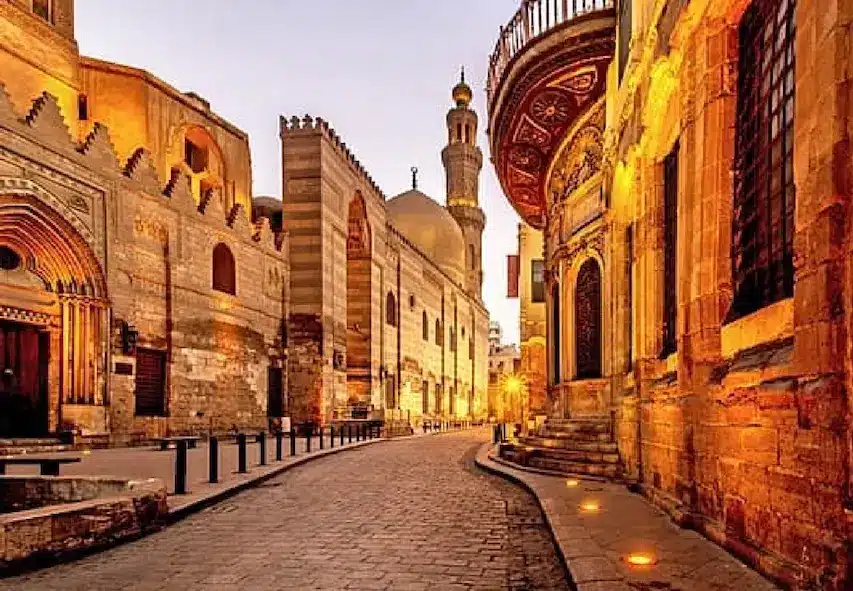
Then the Fatimids fell. After Saladin took power in 1171, the Ayyubid sultans and their Mamluk successors progressively demolished and replaced the Fatimid structures with their own buildings, moving the seat of power to the newly constructed Citadel to the south. What they built in place of the Fatimid monuments is what you see today — one of the most concentrated collections of Mamluk architecture anywhere on earth. Al-Muizz Street now showcases 29 monuments spanning from the 10th to the 19th centuries, representing Fatimid, Ayyubid, Mamluk, and Ottoman periods. Walk from Bab al-Futuh in the north to Bab Zuweila in the south — roughly one kilometer — and you have crossed a thousand years of Egyptian Islamic history on foot.
What to See: The Unmissable Stops
Bab al-Futuh — The Gate of Conquests
Start at the northern end. The Gate of Conquests marks the northern boundary of the Fatimid city fortifications, built in the 11th century using stones taken from the ruins of ancient Memphis. Climb the towers if they are open — the view down the length of Al-Muizz Street from above is one of Cairo’s great perspectives.
The Qalawun Complex
Halfway along the street, the Qalawun Complex stops almost everyone in their tracks. The funerary complex of Sultan Al-Mansour Qalawun was built over the ruins of one of the two original Fatimid palaces, and its mausoleum is considered by many to be the second most beautiful in the world — second only to the Taj Mahal. The entrance ticket for the Qalawun Complex covers most of the major monuments along the street.
The Mosque of Sultan Barquq
Directly adjacent to Qalawun, the complex built by Mamluk Sultan Al-Zaher Barquq houses a mosque and a madrasa dedicated to the four schools of Islamic thought. Together with the Qalawun Complex, these two structures represent some of the greatest surviving examples of Mamluk architecture in Cairo.
Bayt al-Suhaymi
Turn left off the main street into Darb al-Asfar — a lane that was once one of the most expensive addresses in Islamic Cairo — and you find Bayt al-Suhaymi: a beautiful example of Ottoman residential architecture, now a museum, that reveals what elite domestic life looked like in medieval Cairo. The mashrabiya screens, the courtyard fountain, and the painted ceilings reward slow and unhurried attention.
Bab Zuweila — The Southern Gate
The street ends at Bab Zuweila, the magnificent southern gate where Mamluk sultans once watched public executions and where the annual pilgrimage caravan to Mecca departed each year. Climb the minarets of the adjacent Mosque of Al-Muayyad Sheikh — built directly on top of the gate towers — for what many consider the best panoramic view in all of Cairo: the entire length of Al-Muizz Street stretching north, the Citadel to the east, and the medieval city spread out in every direction.
Practical Tips for Al-Muizz Street
The best time to visit is in the evening, when the street is pedestrianized and the monuments are beautifully illuminated. During Ramadan the atmosphere is genuinely extraordinary — lanterns, music, and thousands of people in a medieval street lit entirely by warm light. A general monument ticket costs 220 EGP and is sold at the Qalawun Complex entrance or online (egymonuments.com ). Allow two to three hours minimum. Wear comfortable shoes — the street is uneven in places and there is a great deal of ground to cover.
Khan el-Khalili: Cairo’s Great Bazaar
Six Centuries of Trade
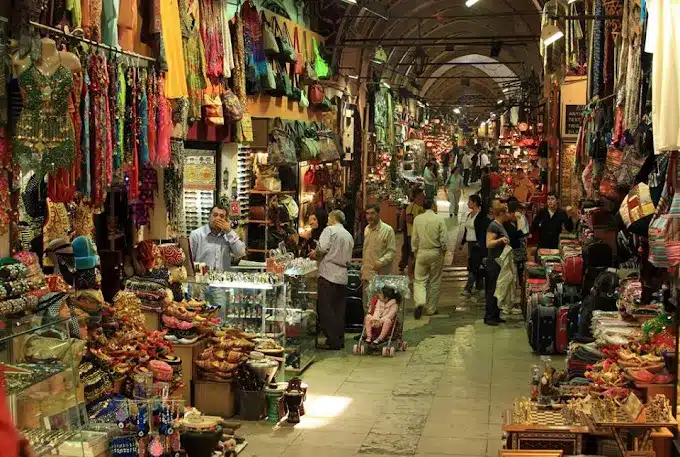
Dating back to 1382, Khan el-Khalili was originally a caravanserai for traders — built right over a Fatimid burial ground. The Mamluk Emir Gehareks el-Khalili ordered its construction, and for the six centuries since, the bazaar has been the beating commercial heart of Islamic Cairo. African, Asian, Middle Eastern, and European traders met here. The great medieval traveler Ibn Battuta passed through. Napoleon’s soldiers browsed the stalls. And today, several million visitors a year do the same.
Khan el-Khalili is not just another Cairo market. It is a community where history, craft, and culture have thrived together since the 14th century. Locals still live in its old Mamluk-style homes with mashrabiya windows, shopkeepers carry on trades passed down from their ancestors, and children weave through the alleyways on their way to school.
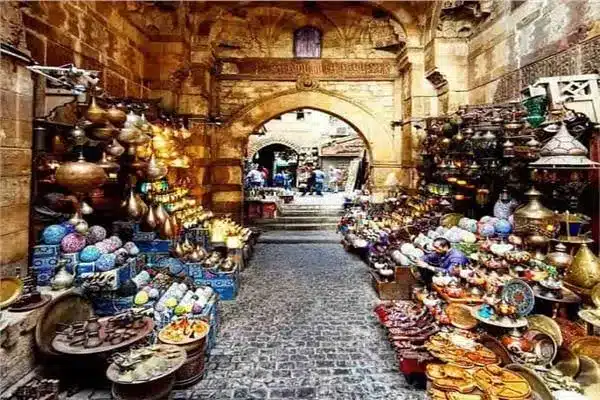
What to Buy — and What to Skip
Buy: Handcrafted gold and silver jewelry — Egypt is renowned in the region for the quality of its goldwork, ranging from 18 to 21 carat. Genuine hand-painted papyrus — look for richer colors and visible brushwork, not flat printed sheets. Egyptian cotton scarves and textiles. Perfume oils — jasmine, lotus, and karkade are all exceptional. The classic Egyptian lanterns, hand-punched from metal, are perhaps the most distinctive souvenir of all. Aromatic spices and hibiscus tea, lightweight and easy to pack.
Be cautious: About 60% of items in Khan el-Khalili are not made in Egypt — Chinese-produced trinkets sit alongside genuine handicrafts, and the difference is not always obvious. Hold items, feel the weight, and ask where they were made. Genuine Egyptian craft has heft and irregularity. Factory-made replicas feel light and too perfect.
The Art of Bargaining
Bargaining is not optional in Khan el-Khalili — it is expected, it is cultural, and it is half the experience. Prices are often inflated because everyone who buys at a bazaar is expected to haggle. A fair deal means walking away at half to two-thirds of the price initially offered. Start low, stay friendly, and never be afraid to walk away — the offer will often follow you down the alley. Accept tea when it is offered; it is genuine hospitality and carries no obligation to buy.
El Fishawi Café — 250 Years of Tea
Tucked inside a narrow alleyway, El Fishawi is one of Cairo’s oldest cafés — dating back to 1771, packed with mashrabiya, chandeliers, enormous mirrors, and genuine historic charm. Order mint tea, listen to the oud music if there is a player, and watch the bazaar pass by. This is not a tourist trap. It is genuinely what it has always been: a place where Cairo sits down, slows down, and talks.
When to Visit and How to Get There
For a lively atmosphere and stunning photography, visit after 5:30 PM. The sunset view is beautiful, and the glowing lanterns give the bazaar a genuinely magical feel — like stepping into the world of One Thousand and One Nights. Mornings before 11 AM are quieter and cooler if you prefer peaceful browsing. Avoid Friday mornings — many shops close for prayers until early afternoon.
Getting there: take Uber or Indrive to Al-Azhar Mosque — every driver knows it — and the bazaar entrance are directly across the street via the underground pedestrian walkway. For a seamless experience that combines both Al-Muizz Street and Khan el-Khalili with an expert guide who knows every corner of Islamic Cairo, book a private tour through LuxeToursEgypt.com.
The Perfect Half-Day: Al-Muizz + Khan el-Khalili Together
The two sites are made for each other. Start at Bab al-Futuh in the mid-morning and walk Al-Muizz Street south — or all the way to Bab Zuweila, climbing the minarets for the view. Allow two to three hours for the monuments. Then turn east toward Khan el-Khalili for lunch, shopping, and a slow afternoon in El Fishawi with a glass of tea.
By the time the lanterns come on at dusk and the bazaar takes on its evening glow, you will have spent a half-day inside a thousand years of living history. That is not a day you will forget quickly.
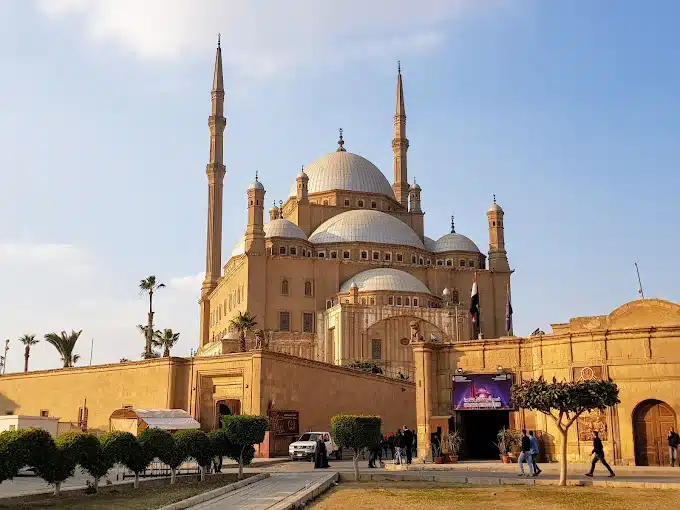
Luxe Tours Team offers many private tours that feature both Al-Muizz Street and Khan el-Khalili as key stops, led by expert local guides available in English, French, German, Spanish, Italian, and more: Cairo Highlights Tour — Saladin Citadel & Muhammad Ali Mosque, the Egyptian Museum, the National Museum of Egyptian Civilization, and Khan el-Khalili. The perfect single-day sweep of Cairo’s greatest landmarks.
Cairo Highlights Tour: Egyptian Museum, Citadel, NMEC & Khan El Khalili
Islamic Cairo Walking Tour — Saladin Citadel, the great mosques of Sultan Hassan and Al-Rifa’i, and Al-Muizz Street from Bab al-Futuh to Bab Zuweila. The deepest possible immersion into a thousand years of Islamic Cairo.
Islamic Cairo Tour – The Medieval Heart of Egypt
Quick Reference
Al-Muizz Street: Bab al-Futuh to Bab Zuweila, Islamic Cairo. Free to walk; monument ticket 220 EGP. Best in the evening. Allow 2–3 hours.
Khan el-Khalili: Adjacent to Al-Azhar Mosque, Islamic Cairo. Free entry. Open daily 9 AM . Best after 5:30 PM. Allow 2–4 hours.
Getting there: Uber/Indrive to Al-Azhar Mosque — 20–30 minutes from Downtown Cairo.
Combine with: Saladin Citadel · Egyptian Museum · NMEC · Khan el-Khalili (Cairo Highlights Tour) | Saladin Citadel · Sultan Hassan · Al-Muizz Street (Islamic Cairo Tour) | Pyramids · Egyptian Museum · Khan el-Khalili (Pyramids & Cairo Classic Tour)
Frequently Asked Questions
Is Al-Muizz Street free to visit?
Walking the street is completely free. Entry to individual monuments — the Qalawun Complex, Bayt al-Suhaymi, and others — requires a combined ticket of 220 EGP covering most sites along the street.
What is the best time to visit Al-Muizz Street?
Evening is best — the street is pedestrianised, the monuments are illuminated, and the atmosphere is extraordinary. During Ramadan it becomes particularly magical. Mornings are quieter and better for photography in natural light.
Is Khan el-Khalili safe for tourists?
Yes. Tourist police patrol the area regularly and the local community depends on tourism. Keep valuables secure, be prepared for enthusiastic vendors, and use a firm but friendly “la shukran” (no thank you) to decline unwanted offers.
How long do you need for both sites?
Allow a full half-day — approximately four to five hours — to do justice to both Al-Muizz Street and Khan el-Khalili. If you want to explore in depth, including Bayt al-Suhaymi, Bab Zuweila, and El Fishawi, allow a full day.
Can I combine Al-Muizz Street with the Citadel?
Yes — and there are many ways to do it. The Cairo Highlights Tour combines the Citadel, the Egyptian Museum, NMEC, and Khan el-Khalili in one day.
The Islamic Cairo Walking Tour pairs the Citadel with Al-Muizz Street and the great mosques.
The Pyramids & Cairo Classic Tour combines the Pyramids, the Egyptian Museum, and Khan el-Khalili. All that are available as private tours through Luxe Tours Egypt