Complete Guide to Saint Simon Monastery & Garbage City
What's Inside This Guide
Most visitors to Cairo spend their days at the Pyramids, the Egyptian Museum, and the Citadel — and all of those are worth your time. But hidden on the limestone cliffs of eastern Cairo is a place that many travellers describe as the single most moving experience in the entire city.
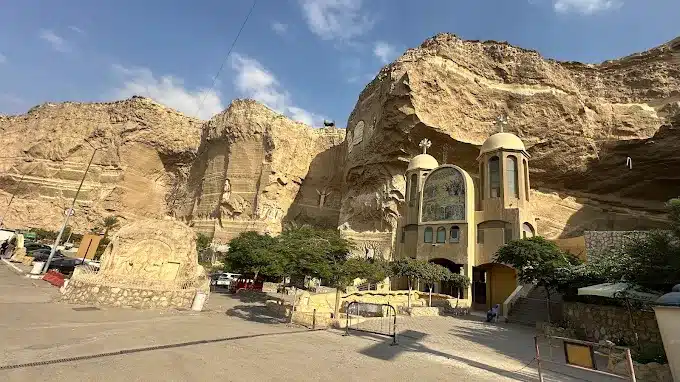
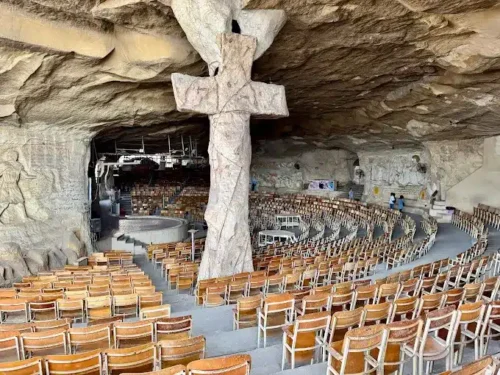
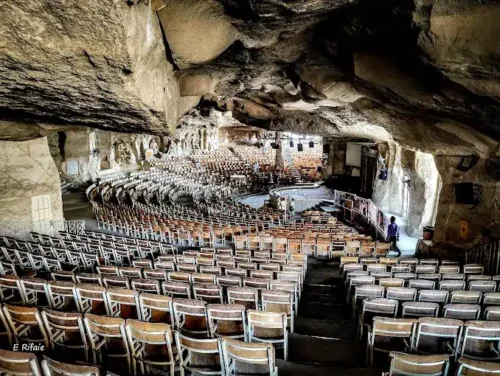
The Cave Church — officially the Monastery of Saint Simon the Tanner — is carved directly into the Mokattam Hills. It can hold up to 20,000 worshippers, making it one of the largest churches in Africa and the Middle East. It is not a ruin or a museum. It is a living, working place of worship, built by one of the most remarkable communities you will ever encounter.
To get there, you pass through a neighbourhood called Manshiyat Naser — better known worldwide as Garbage City. That journey is, in itself, one of the most eye-opening experiences Cairo has to offer. This guide covers everything you need to know.
Garbage City: The Neighbourhood Behind the Miracle
Who Are the Zabbaleen?
The word Zabbaleen (زبالين) means ‘garbage people’ in Arabic — a label Cairo gave them, not one they chose. The Zabbaleen are primarily Coptic Christians who migrated from rural Upper Egypt to Cairo in the 1940s and 50s, fleeing poverty and seeking work. Finding themselves shut out of most formal sectors, they took on a role nobody else wanted: collecting the city’s waste.
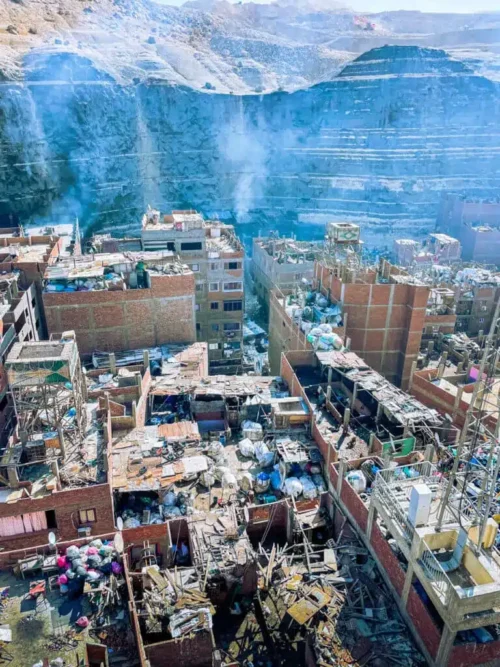
They settled on the slopes of the Mokattam Hills and, over decades, their informal settlement grew into Manshiyat Naser — home today to roughly 60,000 to 70,000 people, almost all Coptic Christian, almost all involved in some part of Cairo’s waste management chain.

The World’s Most Efficient Recycling System
Here is the number that surprises everyone: the Zabbaleen recycle between 80 and 90 percent of the waste they collect. Most modern Western recycling systems manage 20 to 35 percent. The Zabbaleen do it entirely by hand, family by family. Plastic is sorted by type and colour, paper and cardboard separated, metal set aside, fabric sorted by texture. Everything has value; almost nothing is thrown away.
Walking through Manshiyat Naser, you will see towering bales of sorted material lining the narrow streets, trucks and tuk-tuks manoeuvring through impossibly tight alleys, and families sorting waste on the ground floors of their homes. The smell is strong and the conditions are harsh — but look up and you will see Coptic crosses on every building. This is a deeply religious community, and that faith is visible at every turn. By the time you reach the church, the contrast between the streets below and the sanctuary above makes everything feel more extraordinary.
The Legend of Saint Simon the Tanner
Every great sacred site has a story at its heart. For the Cave Church, that story is the Miracle of the Muqattam Mountain — one of the most celebrated events in Coptic Christian history.
Around 979 AD, during the reign of the Fatimid Caliph Al-Mu’izz li-Din Allah, a Jewish vizier at court challenged the Caliph to demand proof from the Coptic community of a verse in the Bible: ‘If you have faith as small as a mustard seed, you can say to this mountain, Move from here to there, and it will move.’ The Caliph issued the challenge to Pope Abraham ibn Zuraa: prove it, or face the persecution of every Christian in Egypt.
After three days of fasting and prayer, the Virgin Mary appeared to the Pope and told him to seek a humble, one-eyed shoemaker who carried a water jar. This man was Simon the Tanner — a cobbler who had, following the literal words of the Gospel, removed his own eye to avoid temptation. A man of no wealth, no status, and no education.
Simon led the congregation to the foot of the Mokattam Mountain. They prayed. And according to Coptic tradition, the mountain lifted three times — the sun visible beneath it each time. The Caliph and his court witnessed it. The Christian community of Egypt was saved. The Mokattam Hills became sacred ground, and centuries later, when the Zabbaleen settled on those same cliffs, they were settling on holy land.

How the Cave Church Was Built
The modern Cave Church complex owes its existence to Father Samaan Ibrahim, born in 1940. He was not originally a priest — he was a layman who felt an overwhelming calling to serve the Zabbaleen community. In the late 1970s and early 1980s, he began holding open-air prayer meetings in the natural caves of the Mokattam cliffs above Manshiyat Naser.
Word spread. His preaching was charismatic, his care for the community genuine. Gatherings grew from dozens to hundreds to thousands. By the 1990s, tens of thousands were coming to the caves for services. Supported by donations from the Coptic diaspora and international Christian organisations, the community began the slow work of expanding the caves into a permanent complex of churches and chapels.
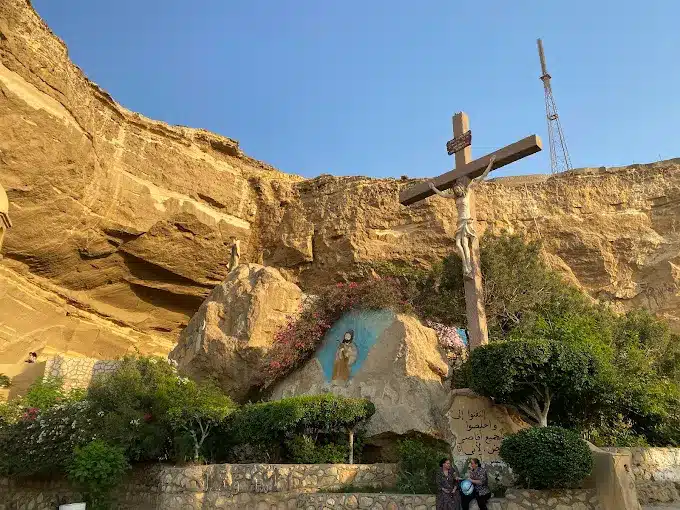
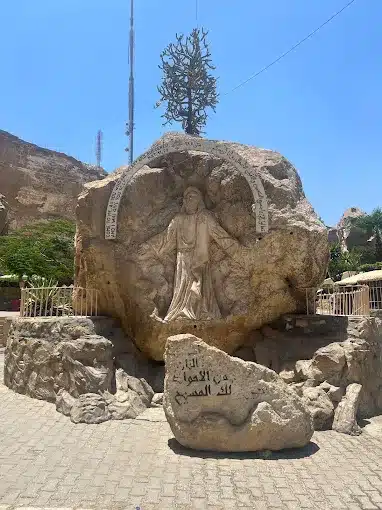
A Polish sculptor named Mario came to the site and spent years carving enormous biblical scenes directly into the cliff faces — the Virgin Mary and Child, the Crucifixion, the Last Supper, the Miracle of the Mountain. His work turned the bare rock walls into a visual Bible and became the most celebrated artistic feature of the entire complex. The work of carving and expanding the caves continues to this day.

What You Will See: Architecture and Sacred Spaces
The Main Amphitheatre
The first thing that hits you when you emerge from the narrow entrance path is the sheer scale. The main cave has been expanded into a vast open-air auditorium — stone seating terraces, carved directly from the rock, rise in tiers on three sides. The altar sits at the base against the cliff face. The acoustics are remarkable; voices carry through the space with a clarity that purpose-built halls rarely match.
Mario’s monumental carvings dominate the rear cliff wall behind the altar — figures rising several metres tall, depicting scenes from the Bible and Coptic tradition. At dusk, when the stone catches the last light, the visual effect is genuinely overwhelming. Visitors of every faith and no faith consistently describe it as one of the most beautiful spaces they have ever seen.

The Inner Caves and Chapels
Beyond the amphitheatre, a network of smaller chapels extends deeper into the cliff, connected by staircases and walkways carved from the living rock. The Chapel of Saint Samaan the Tanner is one of the most intimate — its walls covered with icons, votive candles, and offerings, the air thick with incense. There are also chapels dedicated to the Virgin Mary and the Archangel Michael, used for regular liturgical services.
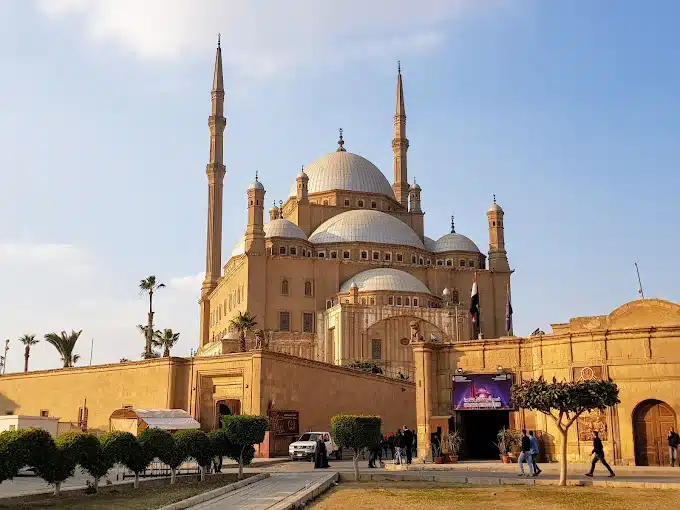
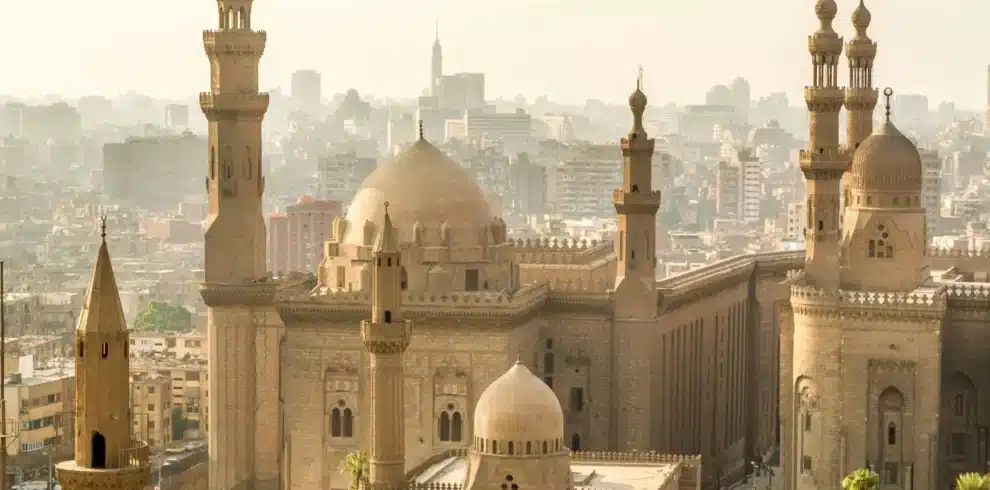
Climb the staircases above the amphitheatre and you are rewarded with a sweeping panoramic view over Cairo: the Citadel of Saladin, the forest of minarets, the Nile glinting in the distance, and — on a clear day — the silhouettes of the Pyramids of Giza on the western horizon.
The Spiritual Life of the Cave Church Today
Father Samaan Ibrahim, now in his eighties, is still active in ministry. He remains one of the most famous figures in the Coptic world, known for his healing ministry, charismatic preaching, and decades of service to the Zabbaleen. Major celebrations at the Cave Church are among the most extraordinary religious gatherings in Egypt — Christmas Eve Mass (January 6th/7th) and Easter Vigil draw tens of thousands of worshippers, filling the 20,000-capacity amphitheatre and spilling onto the surrounding hillside.
While the Cave Church is a Coptic institution, it draws visitors from Catholic, Protestant, Evangelical, and Orthodox traditions worldwide. International coverage in National Geographic, the BBC, and The Guardian has made it a globally recognised site of pilgrimage — and has helped change the narrative around the Zabbaleen from ‘the people who live with the garbage’ to ‘the people who built a cathedral in a cliff.’

The Complete Visitor’s Guide
How to Get There
By Uber or Careem (recommended): Enter ‘Saint Simon Monastery Mokattam’ or ‘Cave Church Cairo.’ Most drivers know the route. The streets of Manshiyat Naser are very narrow — your driver may need to stop at the entrance, from where a tuk-tuk or a 10-minute walk will get you the rest of the way. Tell any tuk-tuk driver ‘Deir Samaan’ (دير سمعان).
By guided tour: For the richest experience, book a private tour through LuxeToursEgypt.com. A knowledgeable guide brings the history of the Zabbaleen and the legend of Saint Simon to life, and helps you navigate the cultural nuances of the neighbourhood. Many of our tours combine the Cave Church with the Citadel of Saladin and Old Coptic Cairo for a full day of Cairo’s Christian heritage.
Essential Practical Information
Opening hours: Daily, approximately 8:00 AM to 5:00 PM. Hours vary during major religious celebrations.
Admission: Free.
Dress code: Modest clothing required. Shoulders and knees covered for all visitors. Closed-toe shoes with grip are strongly recommended — the paths involve uneven rock surfaces and carved staircases.
Best time to visit: October to April; weekday mornings for a quieter visit. Christmas Eve (January 6th/7th) and Easter for an unforgettable atmosphere — but arrive early, as crowds are enormous.
Photography: Permitted of architecture and carvings. Always ask permission before photographing people in the neighbourhood.
The smell: Be prepared for the strong odour of organic waste as you pass through Manshiyat Naser. It fades once you enter the church complex, and it is simply part of the reality of the community’s essential work.
Nearby Attractions to Combine
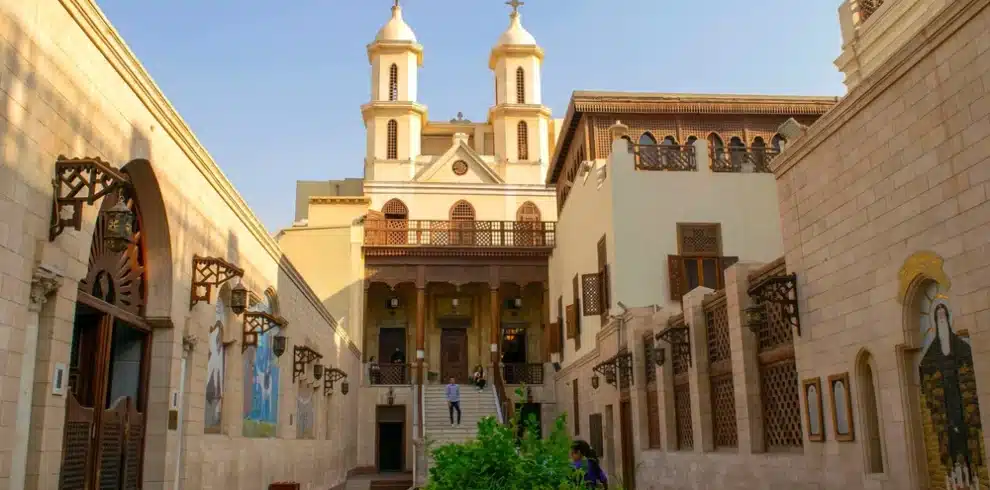
The Citadel of Saladin is 15 to 20 minutes away and an essential Cairo sight. Old Coptic Cairo (the Hanging Church, the Church of Saints Sergius and Bacchus, the Coptic Museum) is 25 minutes away and provides perfect context for the Cave Church visit. Khan el-Khalili bazaar and Islamic Cairo are also within reach for a full-day itinerary.
Why the Cave Church Belongs on Every Cairo Itinerary
The Zabbaleen were given the garbage. They built a monument. That is not a metaphor — it is simply what happened.
You begin in streets that smell of recycling and honest labour, in a neighbourhood the city tried to make invisible. And then you step through a gap in the rock and find yourself in a cathedral carved from living stone, where 20,000 candles burn on Christmas Eve and the sound of ancient liturgy rises into the Mokattam night.
Sitting in the stone amphitheatre, looking up at the carvings and across at Cairo in the valley below, is one of the most humbling and exhilarating things you can do in this city. Do not skip it. Put it on the first day of your itinerary and let it set the tone for everything else you see in Egypt.
And if you want to experience it with the context and depth it deserves, LuxeToursEgypt.com is here to make that happen.

Quick Reference: Cave Church Cairo at a Glance
Location: Manshiyat Naser (Garbage City), Mokattam Hills, Eastern Cairo
Hours: Daily approx. 8:00 AM – 5:00 PM (varies during major celebrations)
Admission: Free — donations welcomed
Dress: Modest clothing, shoulders and knees covered
Footwear: Closed-toe shoes with grip — uneven stone paths throughout
Best Time: Oct–Apr; weekday mornings. Christmas/Easter for atmosphere.
Getting There: Uber/Careem to ‘Saint Simon Monastery Mokattam’ — 25–40 min from Downtown
Nearby: Citadel of Saladin (15 min), Old Coptic Cairo (25 min), Khan el-Khalili (30 min)
Cairo tours



–
Book your private Cave Church tour with